Does Cycling Build Leg Muscles?
I started cycling three years ago mostly for cardio. Didn’t think much about muscle. Then, about six months in, I noticed my jeans were getting tight around the thighs — not from gaining weight, but from my quads filling out. That caught me off guard. So does cycling actually build leg muscles, or was I imagining things? Short answer: yes, but with some caveats. Let me break it down.
The Muscles Engaged While Cycling
Every pedal stroke puts your legs through a full range of motion, and that means multiple muscle groups are working at once. Your quadriceps — the big muscles on the front of your thigh — extend your knee each time you push down. Your hamstrings on the back side help pull the pedal back up. Calves contribute to that downward push at the bottom of the stroke, and your glutes fire to stabilize your hips throughout the whole thing. Cycling won’t isolate these muscles the way a squat rack would, but the constant, repetitive activation over a long ride adds up.
Resistance and Muscle Growth
Muscles grow when they’re challenged by resistance — that’s the basic idea behind any strength training. Cycling provides resistance naturally through hills, headwinds, and gear selection, though it’s generally less intense than throwing around iron in a gym. Climbs and sprints are where cycling really pushes your muscles harder, forcing them to generate more power and leading to strength and endurance gains over time. Flat cruising at easy effort? Not so much.
High-Intensity Cycling
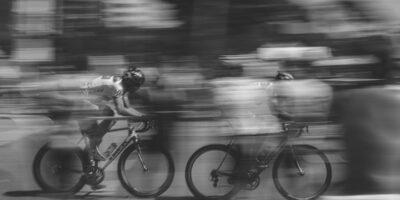
If you want cycling to actually build visible muscle, intensity matters. Sprinting and hill climbing demand a lot from your legs — your muscles recruit additional fibers to handle the higher workload, and those fibers adapt by getting bigger and stronger. Probably should have led with this, but intervals are the real game-changer for leg development on the bike. Most structured training plans use some version of hard effort followed by recovery periods to maximize the work your muscles do without burning you out.
Comparing with Resistance Training
Let’s be honest — cycling alone won’t give you bodybuilder legs. It doesn’t provide the same kind of heavy, targeted loading that squats, leg presses, or deadlifts do. A lot of serious cyclists add weight training to their routine specifically for this reason. Exercises like lunges, deadlifts, and leg curls provide the extra stimulus to push muscle growth beyond what the bike can do on its own. The two complement each other well — cycling builds endurance in those muscles while weights build raw strength.
The Role of Cadence
Cadence — how many times your pedals go around per minute — changes what kind of muscle fibers you’re working. A high cadence (90+ RPM) is easier on your muscles per stroke and leans more on your cardiovascular system, engaging slow-twitch fibers that are built for endurance. A lower cadence with higher gear resistance (think grinding up a steep hill at 60 RPM) taxes your fast-twitch fibers more, which are the ones responsible for power and size. Playing with cadence based on your goals is a simple way to steer what kind of adaptation you get.
Recovery and Nutrition
Here’s the thing people forget — muscles don’t grow during the ride. They grow during recovery. When you stress your leg muscles on a hard ride, tiny tears form in the fibers. Your body repairs those tears and builds back a little stronger, but only if you give it the raw materials. That means adequate protein, proper hydration, and enough rest between hard efforts. Skip recovery and you just stay tired without the gains. A post-ride meal with some protein and carbs within an hour or so of finishing goes a long way.
Cycling’s Impact on Muscle Endurance
Where cycling really excels is muscular endurance — your legs’ ability to keep working for extended periods. Regular riding improves oxygen delivery to your muscles and makes them more efficient at using fuel. That’s why a new cyclist might bonk at mile 20 but six months later can ride 50 miles and still feel decent. Your leg muscles don’t just get stronger; they get better at sustaining effort over long durations.
Benefits for Overall Leg Health
Beyond muscle building, cycling is genuinely good for your legs in general. It improves blood circulation, keeps joints mobile without the pounding that running delivers, and helps counteract the effects of sitting at a desk all day. The smooth, circular pedaling motion keeps joints lubricated and the various leg muscles engaged and flexible. If you’re dealing with knee issues, cycling is often one of the first exercises doctors recommend because it strengthens the muscles around the joint without the impact.
Adapting Cycling for Different Goals
You can tailor your riding to match whatever you’re after. Want bigger legs? Ride hills, use bigger gears, and include sprint intervals. Want endurance? Go long at a steady, moderate pace. Training for a specific event? Follow a structured plan that mixes both. The beauty of cycling is that small changes to terrain, gear selection, and workout structure let you target different aspects of leg muscle development without needing a completely different activity.
Long-Term Adaptations and Muscle Memory
Stick with cycling consistently and your body makes some interesting long-term changes. Muscle memory develops — your legs learn the pedaling motion so efficiently that it takes less energy to produce the same power output. This happens because your nervous system gets better at coordinating the muscle contractions, not just because the muscles themselves get stronger. The result is that experienced cyclists can sustain higher efforts for longer with less perceived fatigue. It’s one of those adaptations that only comes with time on the bike.
So yes, cycling builds leg muscles — just not in the same way that squats or leg presses do. It’s more of a slow burn. You’ll develop strong, defined legs with excellent endurance, especially if you mix in hills, intervals, and some off-bike strength work. The combination of cardiovascular fitness and muscular development is what keeps a lot of us coming back to the bike day after day.