What’s Actually Happening Inside Your Shifter
Bike shifting has grown more complex with the misinformation flying around. Your lever feels dead, your derailleur just sits there mocking you, and every forum post sends you in a different direction. Before you order a replacement shifter at 11pm, understand what’s actually supposed to happen inside that mechanism.
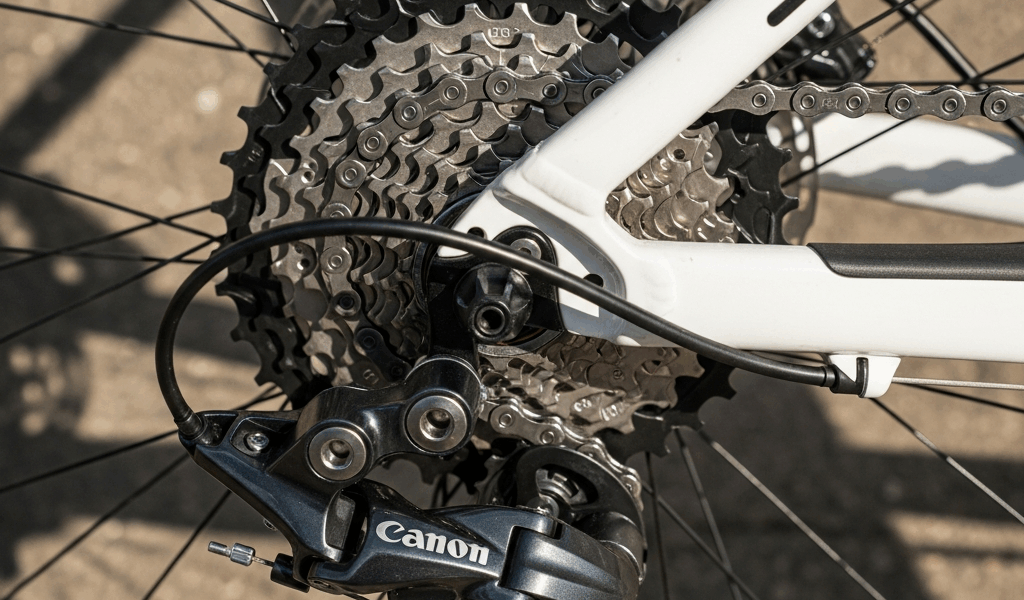
But what is indexed shifting, really? In essence, it’s a mechanical agreement between four parts moving in sequence. But it’s much more than that. When you click the lever, a pawl — a tiny spring-loaded ratchet, smaller than your thumbnail — grabs and pulls the cable exactly the right distance. That cable runs through housing to your derailleur. One click, one cog. The whole system collapses if any single piece breaks the agreement.
Mushy clicks. No audible feedback. Derailleur refuses to move. The fault lives in one of four places: the pawl, the cable, the housing, or the derailleur indexing. Usually just one. Rarely all four simultaneously.
Diagnostic order matters here. Cable tension first — it’s the easiest fix and the most common culprit. Then cable and housing integrity. Then the shifter mechanism isolated from everything else. Then re-index from scratch. Work that sequence and you’ll stop wasting time replacing parts that were never broken.
Step 1 — Check Cable Tension First
Worth flagging before going further. Cable stretch explains why your shifting feels crisp the first two weeks after a fresh build, then falls apart on a Tuesday climb. New cables stretch. That’s just physics.
Find the barrel adjuster. On Shimano and SRAM systems, it’s either on the shifter body itself or where the cable enters the derailleur — a threaded cylindrical knob, usually black, about the diameter of a pencil eraser. That’s your first tool.
Drop the chain onto the smallest cog. Turn the barrel adjuster clockwise until cable slack disappears entirely. You want zero play without actually pulling the derailleur. The feeling is specific — not vague, not approximate.
From there, click once to the second cog. Clean shift? You’re close to dialed. Hesitation, double-clicking, or skipping? You’re under-tensioned. Turn the barrel adjuster counterclockwise a half-turn. Test again. Repeat.
I’m apparently a full-turn adjuster by instinct and that approach burned three hours of a perfectly good Saturday ride. Save yourself the trouble I had. Half-turns only — the threads on barrel adjusters are coarse enough that a full rotation swings you straight past the sweet spot into over-tension territory.
Over-tension has a specific feel. The lever gets sticky. It clicks again without you touching it. The derailleur overshoots gears. You’ll hear chain rub even in the small cog because the derailleur is being pulled slightly sideways by excess tension. Under-tension feels mushy — the click happens but returns without resistance, the lever travels too far, and uphill shifts under load just… don’t commit.
Do a real test ride after adjusting. Light pedaling first, then hard climbing or sprinting. Cable stretch on installs under three weeks old is the single most common reason shifters stop clicking. If the half-turn fix worked, you’re done. If not, move to the cable itself.
Step 2 — Inspect the Cable and Housing for Damage
A cable can look completely fine and still be the problem. Where the damage is changes everything about how the failure shows up.
Start at the derailleur pinch bolt. Look at the cable end entering that bolt — frayed? Shimano shift cables, specifically, are prone to strand separation right at that point. A frayed cable still pulls, but unevenly. Kinked strands resist movement in ways that only show up under climbing load. That’s what makes intermittent failures so maddening — works fine on flat ground, falls apart when you actually need it.
Trace the housing along the frame. Crushed sections at entry ports, bends tighter than roughly 90 degrees, housing pinched under a zip tie — all of these create internal friction. The cable moves, but it’s working against the housing geometry instead of sliding freely.
Older bikes deserve extra attention here. The inner plastic liner inside housing cracks and separates over time. From outside, everything looks normal. Pull the cable by hand and you’ll feel it catch and release as it passes the damaged section. That’s a housing problem, not a shifter problem.
Run the drag test. Disconnect the cable at the derailleur completely. Hold the shifter end. Pull the inner cable slowly from end to end. Smooth, consistent resistance means you’re fine. Any snag, catch, or sudden drag is your answer. A new Shimano shift cable runs about $8-12 at most shops. Jagwire makes a decent universal replacement for around the same price. Replace frayed cables. Replace damaged housing sections — and don’t pair new cable with old housing. The same wear that destroys cable destroys the liner.
Step 3 — Test the Shifter Pawl and Ratchet
Disconnect the cable from the derailleur entirely. Now click the shifter. Feel for clean, distinct mechanical resistance with each click — that sensation is the pawl engaging ratchet teeth.
A contaminated or worn ratchet feels spongy. Clicks lack definition. Sometimes resistance is there, sometimes it isn’t. Shimano Rapidfire units can actually be serviced — spray Park Tool CG-2 degreaser into the shifter body, not WD-40, actual bike-specific degreaser. Work the lever back and forth about forty times. It flushes grit and old dried lubricant out of places you can’t reach otherwise. Shake out the excess. Apply a single drop of Tri-Flow or similar light oil at the ratchet point and work it in. That’s it. Once per season keeps most Rapidfire shifters running for years.
SRAM triggers are a different story. The cartridge internals aren’t really serviceable the same way. Replacement cartridges exist if you can source them, but new SRAM shifters run $30-90 depending on groupset level — sometimes that math just makes more sense than hunting down a cartridge part number.
Be honest about the condition of what you’re working with. A ten-year-old shifter with visibly smooth ratchet teeth — where the tooth profile is worn flat — is done. New shifter. A relatively recent unit that just needs cleaning? The flush-and-one-drop method almost always brings it back.
Step 4 — Re-Index the Derailleur After Cable Work
This is the step people skip. It’s also why people replace perfectly good cables and still have clicking problems afterward.
Chain on the smallest cog. Disconnect the cable at the pinch bolt and let it go completely slack — the derailleur should spring inboard as far as the limit screw allows. That’s your zero point. Everything builds from there.
Reconnect the cable and hand-tighten the pinch bolt. Click to the second cog. The derailleur should move just enough to clear the first cog and sit cleanly on the second — no overshoot, no hesitation, no straddling two cogs. Overshooting means over-tension. Not reaching means under-tension. Half-turn barrel adjuster increments until it clicks cleanly onto cog two.
Shift through all remaining gears. Each click should correspond to exactly one cog. Middle gears perfect but struggling at the largest cog? That’s a limit screw issue — the small Phillips-head screws on the derailleur body marked L and H. Clockwise on the H screw prevents overshoot at the largest cog. Small turns. Quarter-turns. Check between each adjustment.
Then ride it. Indexing set on a workstand can feel slightly different under actual road load — frame flex changes cable tension in ways too small to see but large enough to affect shifting. That’s what makes the final road check non-negotiable rather than optional.
Your shifter clicks. The chain moves. That’s it.

Stay in the loop
Get the latest bike maintenance pros updates delivered to your inbox.