How to Maintain Your Bicycle
I’ll be honest — the first time I tried to do my own bike maintenance, I somehow ended up with more bolts on the floor than on the bike. It was humbling. But here’s the thing: once you get the basics down, keeping your bike in good shape really isn’t that hard. It just takes a little regularity and some common sense. So let me walk you through what’s worked for me over the years.
Cleaning Your Bicycle
Dirt and grime sneak up on you. One day your bike looks fine, and the next it’s caked in road muck. Cleaning it regularly keeps everything working the way it should.
- Grab a bucket of warm, soapy water and a sponge. Nothing fancy.
- Skip the high-pressure hose — it forces water into places it shouldn’t be, like bearings and cable housings.
- Scrub the frame, wheels, and components gently. You’re not pressure-washing a deck.
- Rinse with clean water and dry with a soft cloth. Easy.
Tire and Wheel Maintenance
Tire pressure affects everything — how the bike feels, how it handles, how safe you are. Check it before every ride if you can.
- Give your tires a once-over for wear or damage. If something looks sketchy, replace them.
- Use a tire gauge to check pressure. The recommended PSI is printed right on the sidewall.
- Check your spokes for tightness. If any are loose, snug them up carefully.
- Spin the wheels and watch — they should rotate smoothly without wobbling. If they don’t, it’s time to true them up.
Brake System Maintenance
Your brakes are kind of a big deal. Like, a really big deal. Don’t neglect them.
- Check brake pads for wear. If they’re under 1/4 inch thick, time for new ones.
- Make sure brake cables are tight and haven’t started fraying. A little lube helps too.
- Look at brake rotors or rims for wear or damage.
- Squeeze the levers firmly. They should feel solid, not spongy. Spongy brakes need attention right away.
Drivetrain Maintenance
The drivetrain — chain, cassette, derailleurs — is where all your pedaling effort goes. Probably should have led with this, because if your drivetrain is gunky, nothing else matters much. Keep it clean and lubed for smooth shifting.
- Clean the chain with a proper chain cleaner or degreaser. An old toothbrush works great for the tight spots.
- Apply a bicycle-specific lubricant to the chain. Wipe off any excess so it doesn’t become a dirt trap.
- Check the cassette and chainrings. If the teeth look like shark fins instead of nice even bumps, they’re worn.
- Adjust derailleurs so shifting is smooth. Test through all gears while pedaling on a stand.
Lubrication
Lube reduces friction and keeps things moving the way they’re supposed to. But there’s a fine line between enough and too much.
- Hit the chain, pivot points on derailleurs, brake and gear cables, and any other moving bits.
- Wipe off excess — seriously, this part matters. Extra lube just collects grime.
- Don’t go overboard. Over-lubricating attracts dust and turns into a paste that wears things down faster.
Frame and Contact Points
Your frame is the skeleton of the whole operation. Give it some attention.
- Inspect for cracks or damage, especially around the weld points. Even tiny cracks can grow.
- Make sure the saddle’s comfortable and the seat post is locked in place.
- Check that the handlebars are tight and pointed straight. Misaligned bars feel weird and can throw off your handling.
- Tighten up any loose grips or bar tape. Slipping grips mid-ride are no joke.
Brake and Gear Cables
Cables stretch and fray — it’s just what they do over time. Catching problems early saves you from a sudden failure when you least expect it.
- Look for wear or fraying. If a cable’s looking rough, replace it before it snaps.
- Check the cable housing for cracks or splits too. Damaged housing causes poor performance.
- Lube your cables for smooth operation. A tiny bit goes a long way.
- Adjust cable tension as needed. Things stretch, and your shifting and braking will drift if you don’t stay on top of it.
Bearings
Bikes have bearings in the hubs, bottom bracket, and headset. They’re hidden away, but they matter a lot. That’s what makes a well-maintained bearing set endearing to any rider who’s felt the difference — a smooth spin versus a gritty grind.
- Check for smooth operation. Any grinding or roughness means something’s going on in there.
- If you can access them, clean and repack with fresh grease.
- Replace bearings that are sealed or too far gone to service. No point fighting a losing battle.
Suspension Maintenance (If Applicable)
Got suspension? It needs love too. Don’t just set it and forget it.
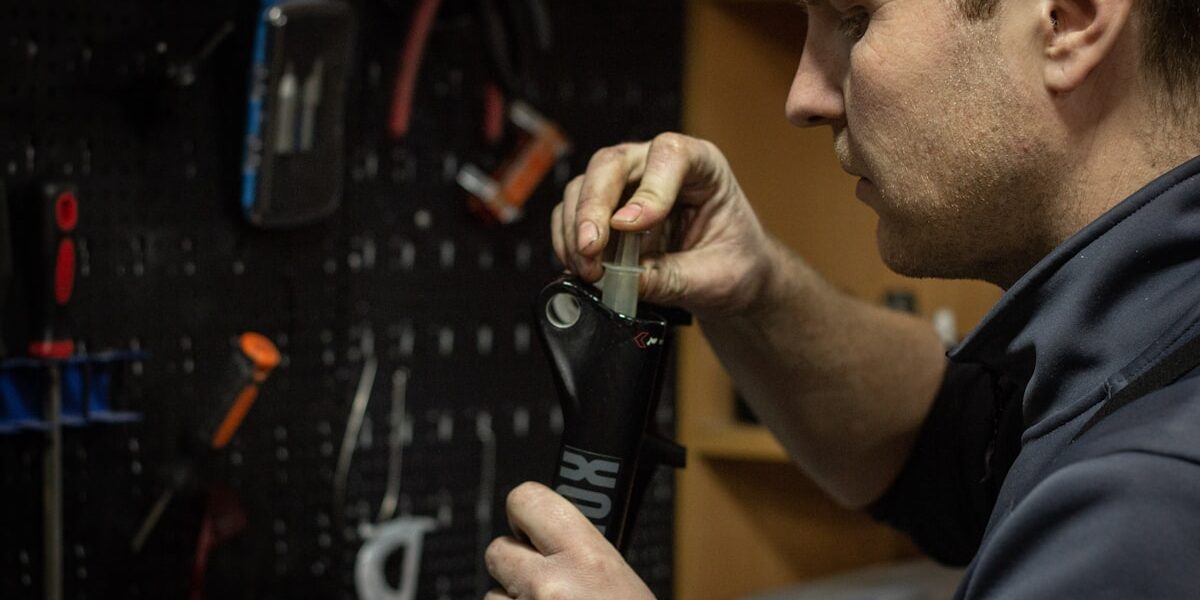
- Clean suspension components after dirty rides to keep grit from destroying seals.
- Check for smooth travel and make sure nothing feels loose or clunky.
- Lube the seals and moving parts according to the manufacturer’s recommendations.
- Get the fork and rear shock serviced on schedule. It’s not cheap, but it’s cheaper than a replacement.
Common Tools
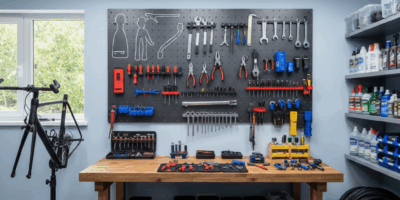
Having the right tools turns a frustrating job into a manageable one. Here’s what I’d recommend keeping around:
- Bike repair stand: makes everything easier when you’re not chasing the bike around the garage.
- Hex wrenches: various sizes, because bikes love hex bolts.
- Screwdrivers: Phillips and flathead for odds and ends.
- Chain tool: for breaking and reconnecting chains.
- Tire levers: for getting stubborn tires off the rim.
- Floor pump: with a gauge so you actually know the pressure, not just guessing by squeezing.
- Lubricants and degreasers: the cleaning duo your drivetrain depends on.
- Cleaning brushes: different sizes for different nooks and crannies.
Regular Inspection Schedule
Having a routine keeps you from forgetting things until they become expensive problems.
- Before each ride: Check tire pressure, brakes, and quick releases. Takes a minute.
- Weekly: Look over tires for damage, give the bike a quick clean, and check for loose bolts.
- Monthly: Lube the chain, inspect brake pads, and make sure gear shifting is dialed in.
- Every 3-6 months: Deep clean the drivetrain, inspect cables, and check bearing condition.