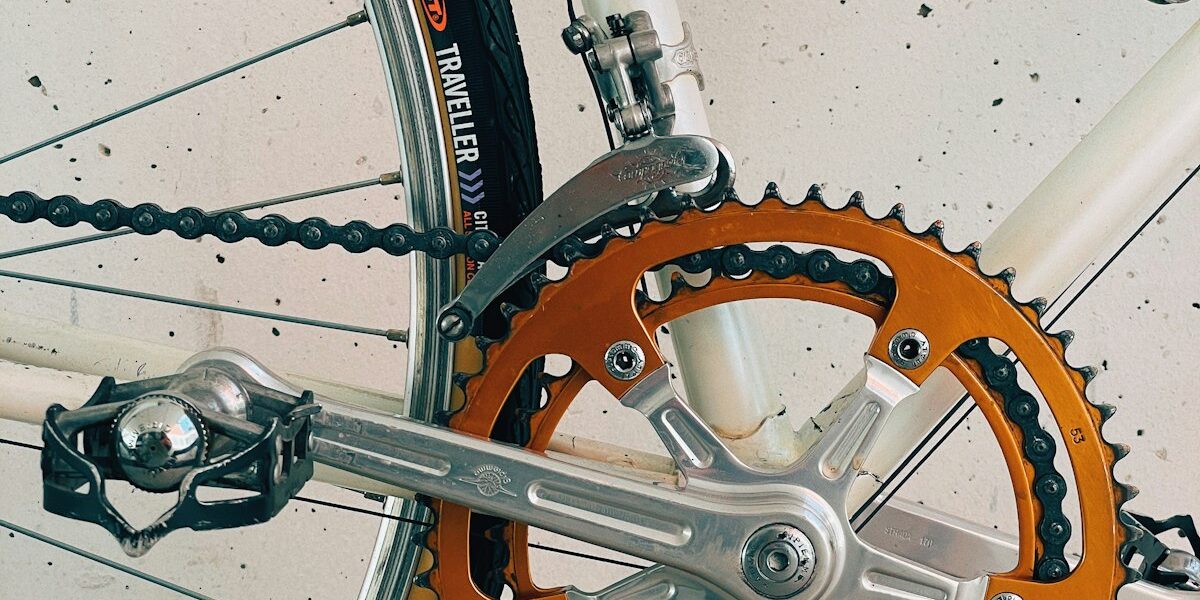
Every week, someone walks into the shop with a brand-new chain that skips under power. They installed it themselves, rode two miles, and now they’re frustrated. The diagnosis takes about three seconds: their cassette is toast, and that $40 chain is already damaged.
Why New Chains Skip on Worn Cassettes
Here’s the mechanical reality: as chains wear, they elongate (what we call “stretch,” though it’s actually pin and roller wear). This stretched chain wears matching patterns into your cassette teeth. The chain and cassette essentially become a matched set of worn components that still work together.
Install a fresh chain on those shark-finned cassette teeth, and physics takes over. The new chain’s correct pitch doesn’t match the elongated tooth spacing. Under load, the chain rides up the tooth faces and skips forward. More power equals more skipping.
The $80 Mistake Math
Let’s break down what happens when you ignore cassette wear:
Scenario A (doing it right): Replace chain at 0.5% wear: $40. Do this three times: $120. Replace cassette when third chain shows accelerated wear: $50. Total over ~9000 miles: $170.
Scenario B (the common mistake): Run chain to 1% wear: $40 (now wasted). Cassette destroyed: $50. Chainrings damaged: $80-200. New chain that now works: $40. Total over ~3000 miles: $210-330.
See the pattern? Neglecting chain replacement doesn’t save money—it multiplies costs and reduces total drivetrain lifespan.
Reading Cassette Wear
Visual inspection tells most of the story:
Healthy teeth have symmetrical profiles with flat or slightly rounded tops. The leading and trailing edges look similar.
Worn teeth develop a shark-fin appearance—the trailing edge (the side the chain pulls against) wears into a hook shape while the leading edge stays relatively intact. This asymmetry is your clearest indicator.
Severely worn teeth are thin, pointed, and may show polished or discolored spots where metal-to-metal contact occurred. At this point, even a new chain won’t track properly.
Focus your inspection on your most-used cogs. For most riders, that’s the middle third of the cassette—the 15-21 tooth range where you spend the majority of your pedaling time.
The Chain-First Rule
Here’s the protocol that prevents expensive mistakes:
- Check chain wear monthly using a chain checker tool ($10-15)
- Replace chain at 0.5% elongation for 11/12-speed, 0.75% for 10-speed and below
- After installing new chain, test ride in your most-used gears under moderate power
- If skipping occurs, cassette replacement is required before that new chain is ruined
When to Replace Both Together
Sometimes a matched replacement makes the most sense:
- Chain wear exceeds 0.75% (1.0% for older drivetrains)
- Visible shark-finning on frequently used cogs
- Shifting quality has degraded despite proper cable tension
- You’re already in the shop for a major service
- The cassette has seen two or more chain replacements
The chainring question: if you’ve worn a cassette badly enough to show shark-finning, inspect your chainrings too. The same elongated chain that damaged the cassette has been wearing those teeth under even higher loads.
Breaking In a New Drivetrain
Fresh components need a gentle introduction:
First 50 miles: Avoid full-power efforts, especially in climbing gears. Let the chain and cassette develop their working relationship under moderate load.
Check chain tension: New chains can appear to “stretch” quickly as pins seat into their bushings. Recheck chain wear at 100 miles; this initial seating is normal and not actual wear.
Fine-tune shifting: New cassettes and chains may need a quarter-turn of barrel adjuster to dial in shifting as components settle.
The Real Investment
A $15 chain wear tool is the single best investment in drivetrain longevity. Check monthly, replace proactively, and you’ll extract maximum life from every component. Try to save $40 on a chain, and you’ll spend $200 replacing everything that worn chain destroyed.
The cassette doesn’t care about your budget. Physics always wins.

Stay in the loop
Get the latest bike maintenance pros updates delivered to your inbox.