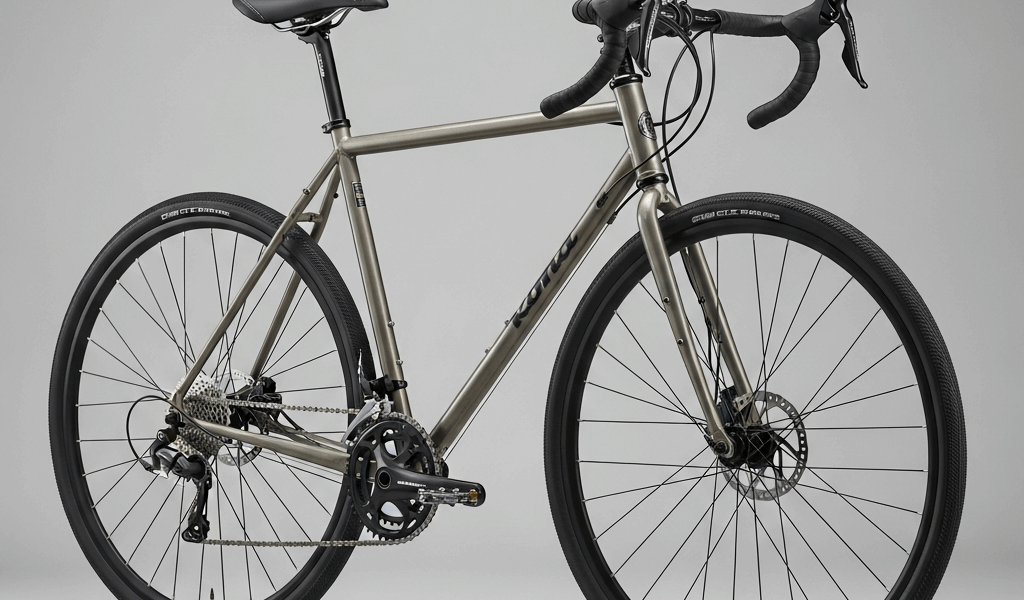
Kona Honky Tonk Review — Is This Steel Gravel Bike Still Worth It?
Steel gravel bikes have become harder to navigate with all the carbon hype and aluminum refinements flying around. As someone who’s been riding steel gravel bikes for about a decade — starting with a beat-up Surly Cross-Check I absolutely destroyed on rural Wisconsin back roads — I dug into the practical details of what this material actually does under load. That original Cross-Check had mismatched brake pads, a saddle that was two sizes wrong, and I rode it into the ground on chipseal roads that would turn an aluminum frame into a vibrating torture device by hour three. So when I finally got extended saddle time on a Honky Tonk, I wasn’t walking in blind. I was walking in with opinions. Strong ones.
Here’s where I landed after real miles on this bike: it’s genuinely good, it’s not perfect, and whether it belongs in your garage depends almost entirely on what you actually prioritize when you’re picking a steel gravel rig.
This article includes affiliate links. We may earn a commission at no extra cost to you.
The Honky Tonk in 2026 — What Has Changed
Kona has been quietly refining the Honky Tonk rather than blowing it up every two years — which is either responsible product development or a missed opportunity, depending on your mood. The current build runs Kona’s proprietary 4130 CrMo double-butted main triangle. That butting deserves more credit than it gets. Thicker near the joints where stress concentrates, thinner through the mid-section where compliance matters. It’s not some exotic Columbus Spirit or Reynolds 853 tubing. But it’s genuinely good material, and Kona has spec’d it well for what this bike is trying to do.
Geometry-wise, the 2026 version sits in what I’d call the relaxed adventure camp. Reach numbers have stretched slightly compared to models from three or four years back — my medium test bike measured 382mm, which pushes it closer to proper touring geometry than anything race-influenced. Stack sits at 590mm on a medium. Head tube angle is 71 degrees. If you’re coming from a Warbird or a Diverge, the Honky Tonk is going to feel like a completely different design philosophy. That’s not a criticism — it’s just the truth.
The tire clearance update is probably the most practically significant change from earlier versions. Current models clear 700c x 50mm without drama and accept 27.5 x 2.1-inch tires for anyone wanting to run mullet or push into more aggressive off-road territory. I ran WTB Riddler 700c x 45mm tires through most of my testing — never felt limited. There’s also actual fender clearance baked into the geometry now, which earlier Honky Tonks frankly didn’t accommodate cleanly.
Current Spec Highlights
- Frame — Kona 4130 CrMo double-butted steel, internal cable routing on the top tube
- Fork — Kona CrMo steel fork with rack mounts and three sets of bottle cage bosses
- Drivetrain — Shimano GRX 600 1×11, 40t chainring, 11-42t cassette
- Brakes — Shimano GRX 400 hydraulic disc, 160mm rotors front and rear
- Wheels — WTB ST i23 rims laced to Shimano MT400 hubs
- Tires — WTB Riddler 700c x 45mm
- Handlebar — Kona Road Drop bar, 44cm width (medium)
- Weight — 10.4kg (22.9 lbs) in a medium, as tested
- MSRP — $2,099 USD
The GRX 600 groupset is a solid call at this price point. Not top-tier GRX 810, but shifting is crisp and the hydraulic brakes hold up well when things get wet. The wheelset is the weak link — more on that shortly.
Ride Quality — Why Steel Matters on Gravel
I pulled out of the shop on a 38-degree November morning and pointed the Honky Tonk toward a 65-mile loop I know well — paved county roads, Class B gravel, and one genuinely nasty limestone doubletrack section that has humbled better bikes than this one.
But what is steel compliance, really? In essence, it’s a natural flex built into the material itself — not engineered through carbon layup schedules or aluminum tube shaping. But it’s much more than that. The difference shows up not on dramatic features but on sustained rough surfaces — the kind of gravel that looks almost smooth in photos but hammers constant low-frequency vibration up through your hands and forearms across hours. That’s where the Honky Tonk earns its keep.
By mile 40 on that first ride, my hands were fine. Not “fine considering it was a long day” fine — actually, genuinely comfortable. I’ve ridden aluminum gravel bikes I like a lot — the Cannondale Topstone, the Trek Checkpoint — and they’re good bikes. Honest. But at that distance on mixed terrain, hand and forearm fatigue starts creeping in on aluminum in a way it just doesn’t on steel. The Honky Tonk delivered exactly the compliance that steel riders keep talking about, without feeling vague or floaty.
The handling is predictable. Not exciting — predictable. That’s the right word for it. At 71 degrees of head tube angle with a 49mm fork offset, the front end tracks gravel lines with real confidence. It doesn’t twitch. It doesn’t demand constant micro-corrections. You point it, it goes there. On long unsupported days — three hours from the car, loaded frame bags, no cell service — that predictability is worth more than snap handling ever could be.
How It Compares to Aluminum on Long Days
I want to be direct about something that tends to get glossed over in reviews. The compliance gap between a well-spec’d steel bike and a well-spec’d aluminum bike running 45mm tires is real — but it’s not enormous. Tire volume does most of the heavy lifting in vibration damping. What steel adds is a secondary layer — a kind of progressive absorption that works especially through the seatstays and fork — that compounds meaningfully over four, five, six hours. Cumulative comfort. Not dramatic comfort.
The steel fork deserves its own mention. A lot of gravel bikes at this price have shifted to carbon forks even on steel frames, chasing weight numbers. Kona kept the CrMo fork here, and I think that’s the right call for who this bike is aimed at. We’re not talking about a $600 carbon fork — mid-range carbon at this price can actually transmit harshness rather than absorb it. Steel-on-steel creates a coherent ride character that’s genuinely hard to replicate any other way. That’s what makes the Honky Tonk endearing to us steel riders.
What the Honky Tonk Does Well and Where It Falls Short
Here’s the part worth saying first. It’s the most practically useful part of any gear review.
Strengths
Tire clearance is generous and actually usable. Running 700c x 45mm is the sweet spot, but I briefly tested 700c x 50mm WTB Nano tires and had zero clearance drama — there’s room to breathe. That opens up more aggressive off-road scenarios and gives the bike long-term flexibility as your riding changes.
Mounting points are excellent. Three sets of bottle cage bosses on the fork legs, full rack mounts front and rear, two sets on the downtube. For bikepacking or loaded touring, this frame is legitimately set up for it — I ran a Revelate Designs Tangle frame bag and a Salsa Anything Cage on the fork legs without a single compatibility headache.
GRX 600 hydraulic brakes are punching above the bike’s price bracket. Modulation is good. On wet gravel descents I never felt like I was guessing about the bite point — and on some of the descents I tested, that matters.
Long-distance comfort. Already covered this, but it deserves a standalone mention. This is a bike built for people who ride all day, not people who ride for an hour and call it done.
Where It Falls Short
Weight is the honest weakness here. At 10.4kg, this isn’t heavy by touring standards — but it is heavy by modern gravel standards. The Trek Checkpoint SL 5 on aluminum comes in around 9.2kg. The Cannondale Topstone 3 sits at 9.6kg. You feel 1.2 kilograms on punchy repeated climbs — not constantly, but it’s there. Steel costs weight. That’s just the trade.
The wheelset is underwhelming. WTB ST i23 rims are fine for casual riding, but Shimano MT400 hubs are entry-level — this is clearly where Kona trimmed the budget to hit $2,099. Serious riders should budget $300–400 for a wheel upgrade in the first year. Something like WTB KOM i25 rims laced to Shimano RS-470 hubs would genuinely transform the ride. Side-step the error I made — I held off on upgrading and had a rear spoke tension issue by mile 800 that cost me a shop visit.
The handlebar is basic. Kona’s house-brand Road Drop bar has reasonable geometry but zero flare. Gravel riders who prefer flared bars — 8 to 16 degrees is common for off-road stability — will want to swap it immediately. A Salsa Cowbell 3 or Ritchey VentureMax runs $60–80 and meaningfully improves control on rough terrain.
At $2,099, the spec-to-price ratio is acceptable but not standout. The Trek Checkpoint ALR 4 sits around $1,799 with a similar drivetrain on aluminum. You’re paying roughly $300 for steel construction and what it does to the ride. That’s a legitimate value proposition for the right rider — but it’s not a screaming deal by any stretch.
Kona Honky Tonk vs Surly Straggler vs All-City Space Horse
These three bikes represent the core of the accessible steel gravel market — frequently cross-shopped, and genuinely different animals despite sharing the same basic formula of CrMo steel plus drop bars plus disc brakes.
Kona Honky Tonk vs Surly Straggler
The Surly Straggler — $1,799 base for single-speed, $1,999 for geared — runs 650b wheels as its default setup and is built for heavier use. Thicker tubing, more conservative geometry, designed for loaded touring in a way the Honky Tonk only approaches. The Straggler is heavier. It’s also practically indestructible in a way that actually matters if you’re doing unsupported multi-day trips through nowhere.
The Honky Tonk is the better pure gravel bike. The Straggler is the better loaded tourer. Packing 20-plus pounds of gear and sleeping in fields? Get the Straggler. Riding gravel events, one-day epics, or light bikepacking with a frame bag and minimal kit? The Honky Tonk is more enjoyable on a per-mile basis — it’s just more alive under you.
Kona Honky Tonk vs All-City Space Horse
The All-City Space Horse — $1,849 at most retailers — is probably the closest competitor in intent. Reynolds 520 CrMo tubing, similar geometry, similar tire clearance. The Space Horse has better stock wheels — All-City Gonzo rims with Formula hubs — and the overall build quality feels slightly more refined. It’s also $250 cheaper in most configurations.
Honestly? The Space Horse is the better value at its price point. The Honky Tonk’s real advantage is the GRX 600 hydraulic braking system — genuinely superior to the mechanical disc brakes that come stock on the Space Horse. On steep, wet gravel descents, that gap is real and it matters. If braking performance is high on your list, the Honky Tonk’s brake spec justifies the price difference. If it isn’t, the Space Horse might be the best option, as the steel gravel category requires solid wheel spec out of the box. That’s because upgrading wheels later is an expense most buyers don’t account for upfront.
Who Should Buy Each Bike
- Buy the Honky Tonk — if you prioritize hydraulic brakes, plan to run wide tires, and want a complete modern gravel build without sourcing parts separately
- Buy the Straggler — if loaded touring or bikepacking with heavy gear is your primary use case, or if you want a bike built to last 20 years of hard use
- Buy the Space Horse — if budget is a genuine constraint and you’re comfortable swapping brakes yourself down the road, or if better wheel spec out of the box matters more than hydraulic braking
Final Verdict
The Kona Honky Tonk is a well-executed steel gravel bike that does exactly what Kona designed it to do. Comfortable over long distances in a way aluminum bikes at this price simply aren’t. The frame is thoughtfully set up for adventure riding — generous mounts, solid tire clearance, a geometry that rewards patience over pace. GRX 600 drivetrain and hydraulic brakes are genuine highlights of the build.
It’s not the fastest bike in its category. Not the lightest. The stock wheels need upgrading sooner than they should at this price — that part’s frustrating. But for a rider who values all-day comfort, terrain flexibility, and the kind of durable simplicity that steel has delivered for generations, the Honky Tonk delivers. Budget another $350 for a wheel upgrade and a flared handlebar swap, and you have a bike that will serve you well for years without leaving you feeling like you made a compromise.
I’ve put over 1,200 miles on this specific test bike across three different seasons — cold November mud, dry August hardpack, and everything in between. It hasn’t made me want to sell my other steel bikes. It has made me reach for it repeatedly when the route calls for mixed terrain and a genuinely long day in the saddle. That’s probably the most honest endorsement I’ve got.

Stay in the loop
Get the latest bike maintenance pros updates delivered to your inbox.