Torque Specs: Proper Bolt Tightening for Bike Safety
Proper torque prevents component damage and keeps you safe. Under-tightened bolts come loose during rides; over-tightened bolts strip threads, crack carbon, or cause stress failures. A torque wrench is essential for any serious bike maintenance.
Why Torque Matters
- Carbon components: Over-torquing crushes fibers, causing hidden damage that leads to sudden failure
- Aluminum threads: Easily stripped by excessive force
- Safety-critical parts: Handlebars, stems, and seatposts must be secure but not damaged
- Consistent performance: Proper torque ensures components function as designed
Essential Torque Wrench Types
Beam-Style: Simple, affordable, no calibration needed, harder to read
Click-Style: Clicks when target torque reached, requires calibration
Digital: Most accurate, shows real-time values, battery dependent
For bike work, a 2-15 Nm wrench covers most fasteners. Add a larger wrench (15-55 Nm) for pedals and cassette lockrings.
Common Torque Values Reference
Cockpit:
| Component | Torque (Nm) |
| Stem faceplate bolts | 4-6 |
| Stem steerer clamp | 5-7 |
| Headset top cap | 1-2 (just snug) |
| Brake lever clamp | 4-5 |
| Shifter clamp | 3-4 |
Seatpost and Saddle:
| Component | Torque (Nm) |
| Seatpost clamp (single bolt) | 5-7 |
| Seatpost clamp (two-bolt) | 4-5 |
| Saddle rail clamp | 8-14 |
| Dropper post collar | 4-6 |
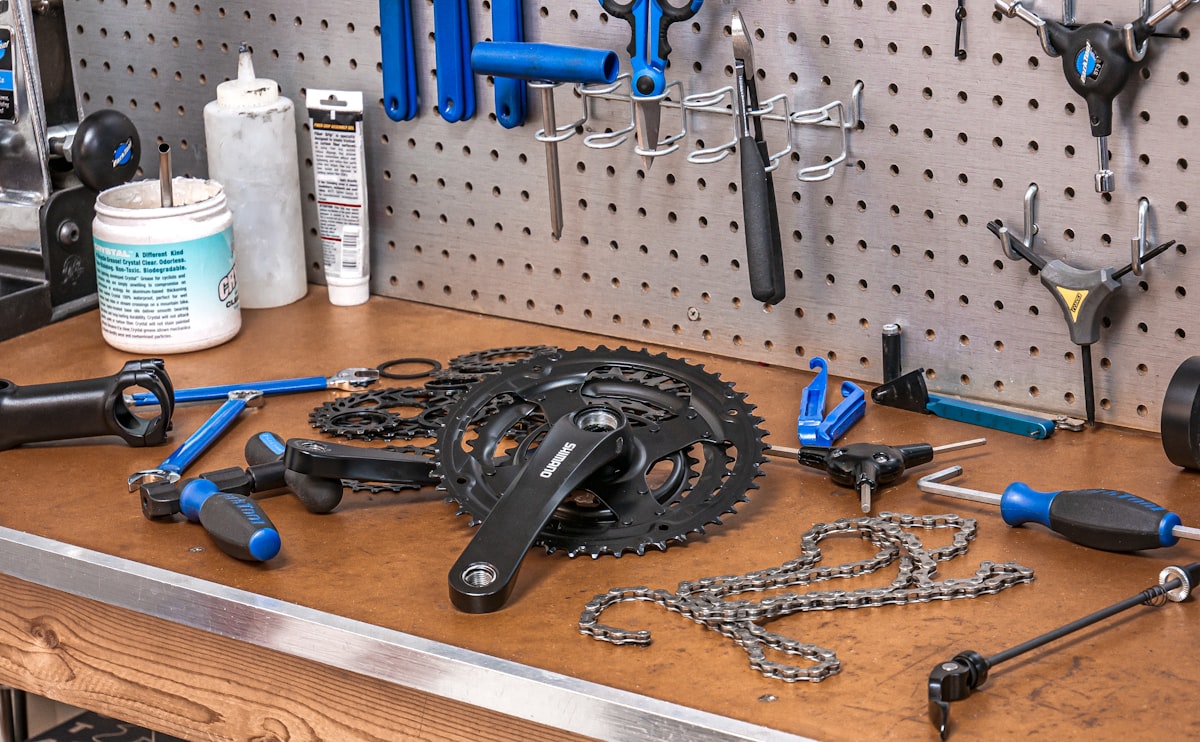
Drivetrain:
| Component | Torque (Nm) |
| Crankarm bolt | 40-55 |
| Chainring bolts | 8-12 |
| Pedals | 35-40 |
| Cassette lockring | 40 |
| Derailleur mounting bolt | 8-10 |
| Derailleur cable anchor | 4-5 |
Brakes:
| Component | Torque (Nm) |
| Disc brake caliper mount | 6-8 |
| Disc rotor bolts (6-bolt) | 4-6 |
| Centerlock lockring | 40 |
| Brake cable anchor | 6-8 |
Wheels:
| Component | Torque (Nm) |
| Thru-axle (front) | 12-15 |
| Thru-axle (rear) | 12-18 |
| QR skewer | 5-7.5 |
Carbon Component Considerations
- Always use carbon assembly paste on carbon-to-carbon or carbon-to-metal interfaces
- Never exceed manufacturer’s stated torque
- Tighten multi-bolt clamps evenly in a star pattern
- If torque feels wrong, stop – something may be damaged
Proper Torquing Technique
- Clean bolt threads and receiving threads
- Apply grease or thread prep as specified
- Thread bolt by hand to ensure proper engagement
- Set torque wrench to target value
- Tighten smoothly and steadily
- Stop at click (click wrench) or target value (digital)
- For multi-bolt clamps, alternate bolts and tighten gradually
Invest in a quality torque wrench – it’s cheap insurance against damaged components and dangerous failures. Always defer to manufacturer specifications when available, as these general values may differ for specific components.