Bike repairs have gotten complicated with all the specialty tools and proprietary parts flying around. But the truth is, most common problems you’ll run into on a ride can be fixed with basic skills and a few simple tools. Here are five repairs every cyclist should know how to handle.
1. Fixing a Flat Tire
If you ride long enough, you’re going to get a flat. It’s not a matter of if, it’s when. So be ready. Carry a spare tube, a set of tire levers, and a mini pump or CO2 inflator. When it happens, pop the wheel off, use the levers to peel the tire bead off the rim, pull out the punctured tube, and run your fingers along the inside of the tire to find whatever caused the flat. Glass, a thorn, a tiny wire — get it out. Then slide in the new tube, seat the tire back on the rim, and pump it up. Whole thing takes maybe ten minutes once you’ve done it a few times. First time? Budget twenty.
2. Adjusting Your Brakes
Squealing brakes or brakes that barely stop you are both bad news. Usually it’s a simple fix. If the pads are rubbing, loosen the caliper bolt, squeeze the brake lever to center everything, then tighten it back down. If the pads are worn thin or glazed over, swap them out — they’re cheap. Probably should have led with this, because brakes are literally the most important safety feature on your bike. Make sure the pads hit the rim squarely, not the tire and not below the rim.
3. Keeping the Chain Happy
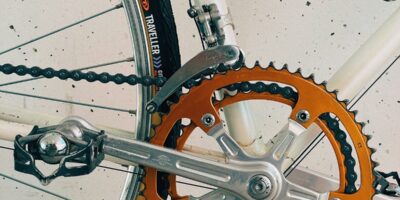
A dry chain sounds terrible and shifts like garbage. Every couple of weeks — or after any wet ride — wipe down your chain with a clean rag, then apply a proper bike chain lube. Don’t use WD-40 (it’s a degreaser, not a lubricant). Drip the lube on while slowly spinning the pedals backward, let it sit for a minute, then wipe off the excess. That’s what makes regular chain care endearing to serious riders — it takes two minutes and makes the bike feel completely different.
4. Tightening Loose Bolts
Feel a rattle? Something wobbling? Before you panic, check your bolts. Seat post, stem, handlebars, wheel quick releases — all of these can work loose over time, especially on rough terrain. A multi-tool with Allen keys covers most of them. Snug is good. Gorilla-tight is not. Over-torquing strips threads and can crack carbon components. If you want to be precise, get a torque wrench — but for most bolts, hand-tight plus a quarter turn does the job.
5. Trueing Your Wheels
A wobbly wheel is out of true, meaning some spokes are tighter than others. You can fix minor wobbles with a spoke wrench — tighten spokes on the side opposite the wobble, a quarter turn at a time. Go slow. It’s easy to overcorrect and make things worse. For anything more than a slight shimmy, take it to a shop. Wheel truing is one of those skills that takes real practice to get right, and a badly trued wheel is worse than one that’s slightly off.
Knowing these basic fixes keeps you rolling instead of walking. And there’s something satisfying about handling a problem on the side of the road and getting back to your ride without calling anyone for a pickup. Build the skills now so you’re ready when you need them.