Your Bike Sat All Winter — Here’s How to Fix That
Even if you stored your bike properly, months of sitting takes a toll. Cables stretch and corrode, tires lose pressure and develop flat spots, and lubricants dry out. A spring tune-up takes about an hour at home and saves you from mechanical failures on your first real ride of the season.
Tires and Wheels
Start with the tires. Inflate them to the pressure listed on the sidewall and inspect the entire tread surface for cuts, embedded glass, or cracking in the rubber. Spin each wheel slowly and look for wobbles — both side-to-side and up-and-down. A slight wobble might be a loose spoke you can tension with a spoke wrench. Anything more than a couple millimeters of runout probably needs a proper truing stand.
Check the quick releases or thru-axles. They should be snug with no play when you grab the top of the wheel and push laterally.
Brakes
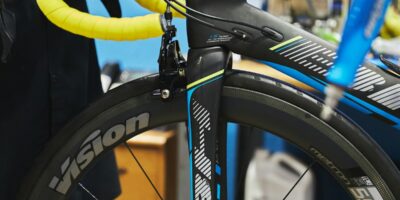
Rim brakes: check pad wear by looking at the indicator grooves. If the grooves are barely visible, replace the pads. Squeeze each lever and confirm the pads hit the rim squarely — not overlapping onto the tire or dipping below the rim edge. Adjust the barrel adjuster at the lever to take up any cable slack.
Disc brakes: spin the wheel and listen. A light brush sound is normal, but a constant scraping means the rotor is bent or the caliper needs realignment. Check pad thickness through the caliper opening — most pads need replacing when the friction material is under 1mm. If your levers feel spongy, the hydraulic fluid may need bleeding.
Drivetrain
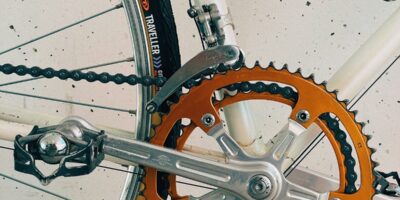
This is where winter neglect shows up most. Clean the chain thoroughly — a degreaser and a stiff brush work fine. Once it’s dry, measure chain wear with a chain checker tool. A chain that reads 0.75 percent wear on an 11- or 12-speed drivetrain should be replaced immediately. Running a worn chain destroys cassettes and chainrings, which are far more expensive to replace.
Apply fresh chain lube — wet lube if you’ll be riding in rain, dry lube for fair weather. Run the chain through every gear combination and watch for skipping, hesitation, or noise. Adjust the rear derailleur barrel adjuster in quarter-turn increments until shifts are crisp.
Inspect the derailleur hanger for bends. A bent hanger causes ghost shifting that no amount of cable adjustment will fix. Replacement hangers are cheap and specific to your frame — order the right one.
Cables and Housing
Run your fingers along all cable housing looking for kinks, cracks, or fraying at the ends. Sticky or sluggish shifting and braking is often caused by corroded cables inside old housing, not component problems. If your cables haven’t been replaced in two years, just do it now. New cables make the whole bike feel better.
Headset, Bottom Bracket, and Hubs
Straddle the front wheel between your knees and try to turn the handlebars with the brakes locked. Any clunking means the headset is loose. Check the bottom bracket by grabbing each crank arm and wiggling laterally — any play means the bearings need attention. Spin each wheel and listen for grinding from the hubs.
Bolts and Torque
Check every bolt on the bike — stem, seatpost clamp, bottle cage, rack mounts, and handlebar clamp. Carbon frames and components require a torque wrench. Over-torquing carbon is how you crack a frame or crush a seatpost. If you own a carbon bike and don’t own a torque wrench, buy one before your first ride.
The Test Ride
Take a short spin around the block before heading out on a real ride. Shift through every gear, test both brakes at low speed, and listen for any rattles or clicks. Fix problems in the garage, not ten miles from home.


Stay in the loop
Get the latest wildlife research and conservation news delivered to your inbox.