How to Service Your Bicycle
Servicing your own bike has gotten complicated with all the specialty tools and conflicting advice flying around. But here’s the reality — I’ve been doing my own wrenching for years, and the core stuff hasn’t really changed. Cleaning, lubricating, inspecting, and adjusting. That’s the loop. With a few basic tools and some patience, you can keep your bike running great without paying shop prices every time something needs attention. Let me walk you through it.
Cleaning Your Bike
Always start with a clean bike. Grab a bucket of warm soapy water and a sponge. Wipe down the frame, wheels, and handlebars. For the really grimy spots — usually around the drivetrain — put a little degreaser on a brush and scrub it out.
- Rinse the bike with clean water when you’re done.
- Dry it off with a clean cloth so nothing rusts.
Lubrication
Lubricate the key moving parts to reduce friction and prevent wear. Focus on the chain, derailleurs, and brake pivots. Always use a bike-specific lubricant. And go easy with it — too much lube is almost as bad as no lube because it just collects dirt and creates grinding paste.
- Apply a few drops of lubricant to the chain while pedaling backward slowly.
- Wipe off the excess with a clean rag. This step matters.
Chain Lubrication
The chain deserves its own mention because it’s the single most important thing to keep lubed. Apply lubricant sparingly to each link. Rotate the pedals to spread it evenly. Then wipe off any extra. A properly lubed chain runs quiet and shifts better — you’ll notice the difference right away.
Inspecting Components
Probably should have led with this, because catching problems early is what keeps small issues from turning into expensive ones. Get in the habit of checking these things regularly:
Brakes
- Check brake pads for wear. If they’re worn down to the wear indicator line, replace them. Don’t push it.
- Inspect brake cables for fraying or rust. Replace any cable that looks damaged.
Tires and Wheels
- Check tire pressure. The recommended PSI is printed right on the tire sidewall.
- Inspect tires for cracks, cuts, or bits of glass and debris stuck in the tread.
- Spin the wheels and watch for wobbles — that’s your sign they might need truing.
Drivetrain
- Look at the chainrings and cassette for worn or shark-finned teeth. Replace worn parts before they cause chain skip.
- Check the chain for stretch using a chain checker tool. Stretched chains wreck everything they touch.
- Make sure derailleurs are properly aligned.
Frame and Fork
Inspect the frame for cracks or dents, especially near welded joints. These are stress points. Check the fork for straightness and any signs of bending or impact damage. If you’ve crashed recently, look extra carefully. That’s what makes catching frame issues early endearing to riders who value their safety — it’s way cheaper than finding out the hard way.
Adjustments
Once everything is clean and inspected, fine-tune the adjustments for comfort and performance. This is the fun part — where you really dial things in.
Saddle Height
Adjust the saddle so your leg is nearly straight at the bottom of the pedal stroke — not fully locked out, but close. Use an Allen key to loosen the seat post clamp, slide the saddle to the right height, then retighten it securely. Getting this right makes a surprising difference in both comfort and power.
Handlebar Position
Adjust the handlebars so they’re comfortable to reach and at a height that doesn’t strain your neck or lower back. Loosen the stem bolts with an Allen key, adjust the height and angle, then tighten everything back up. If you find yourself constantly shifting positions to get comfortable, your bars probably aren’t set right.
Derailleurs
Proper derailleur adjustment is what separates crisp, reliable shifting from that clunky mess where gears jump or refuse to engage. Use the barrel adjuster to fine-tune cable tension. The derailleur should move the chain smoothly across every gear without hesitation.
- Set the front derailleur limit screws so the chain can’t drop off the chainrings.
- Fine-tune the rear derailleur with the barrel adjuster until shifts are snappy and precise.
Brakes
Adjust your brakes for solid, confident stopping. For rim brakes, make sure the pads hit the rim flat and evenly — not the tire, and not at an angle. Adjust cable tension and pad position until the lever feel is firm and consistent. For disc brakes, center the caliper over the rotor and adjust pad spacing with the caliper bolts. Disc brakes that rub are one of the most annoying sounds in cycling, so take the time to get it right.
Wheel Truing
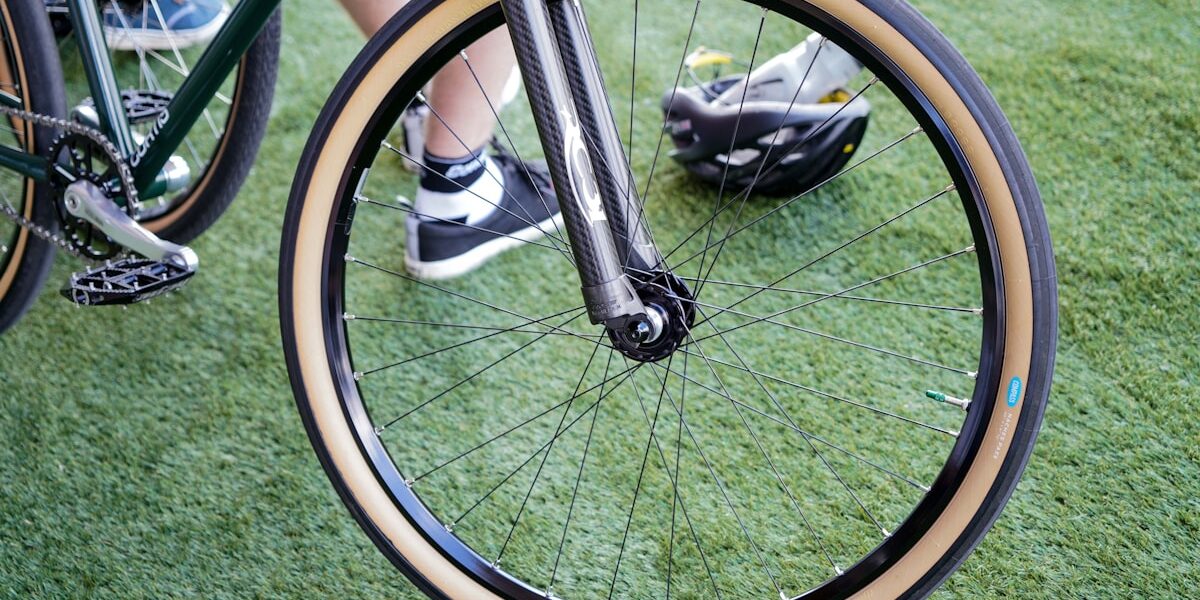
A true wheel rolls smooth and keeps your brakes from rubbing. Mount the bike on a repair stand, spin the wheel, and watch for any side-to-side wobble. Use a spoke wrench to tighten or loosen spokes — small turns only. Work gradually and check your progress often. If the wheel is really out of whack, don’t be afraid to take it to a shop. There’s no shame in that.
Tools Needed
Having the right tools makes everything easier. You don’t need a fortune’s worth, but these basics will cover most jobs:
- Allen keys (various sizes)
- Screwdrivers (Phillips and flathead)
- Chain checker tool
- Bike pump
- Lubricant
- Spoke wrench
- Repair stand (optional but it’s a real game-changer)
Setting Up a Maintenance Schedule
Having a schedule takes the guesswork out of maintenance. Base it on how much you ride:
- Weekly: Check tire pressure, lube the chain, test your brakes.
- Monthly: Inspect the drivetrain, clean the whole bike, check for loose bolts.
- Annually: Full inspection, replace any worn parts, deep clean, and lubricate everything.
Common Issues and Troubleshooting
Every rider runs into these at some point. Knowing what to look for saves time and frustration.
Squeaky Brakes
- Clean the brake pads and the rim or rotor surface.
- Check pad alignment and adjust if they’re hitting at a weird angle.
- Replace worn-out pads — sometimes that’s all it takes.
Grinding Gears
- Clean and lubricate the chain first. That fixes it more often than you’d expect.
- Check derailleur alignment and adjust as needed.
- Inspect for a worn chain or cassette and replace if they’re past their prime.
Soft Tires
- Check for punctures and patch or replace the tube.
- Inflate to the recommended pressure.
- Inspect the tire itself for wear or damage — sometimes the tire is the problem, not the tube.
Taking care of your bike doesn’t have to be hard or time-consuming. Regular checks and a bit of hands-on work prevent small issues from becoming expensive repairs. Once you get into a rhythm, servicing your bicycle becomes second nature — just another part of riding.