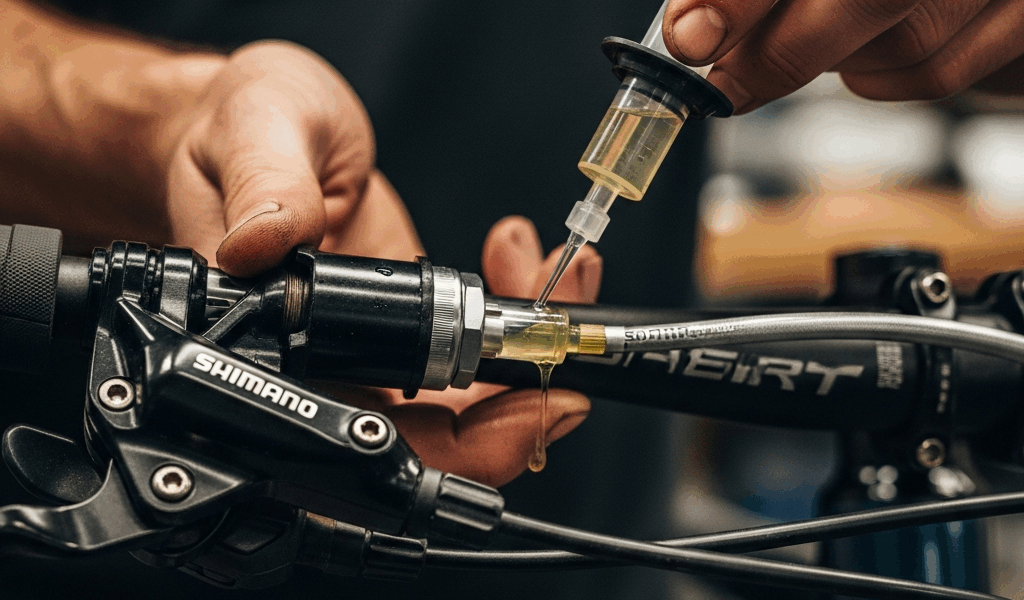
Hydraulic Bike Brake Bleeding — Step-by-Step for Shimano and SRAM
Hydraulic bike brake bleeding is one of those jobs that looks intimidating until you’ve done it once. After that, it becomes almost meditative — a satisfying hour in the garage that transforms a spongy, uncertain lever into something that bites hard and feels completely predictable. I’ve been bleeding my own brakes for about six years now, starting with a Shimano XT setup on a hardtail and eventually adding a SRAM Code RSC system to the mix when I picked up a full-suspension bike. The two systems are genuinely different in their bleeding procedure, different in the fluids they require, and different enough that grabbing the wrong bleed kit means a wasted trip to the bike shop. This guide covers both — start to finish — so you can do this yourself at home without paying shop labor rates, which run anywhere from $30 to $60 per brake depending on where you live.
Signs Your Brakes Need Bleeding
Probably should have opened with this section, honestly. A lot of home mechanics pull out the bleed kit at the first sign of trouble when the actual problem is something else entirely. Knowing the difference saves time and mineral oil.
The Spongy Lever
This is the classic symptom. You squeeze the lever and it has that soft, compressible feeling — like squeezing a stress ball instead of actuating a hydraulic piston. Air in the system is almost always the cause. Hydraulic fluid doesn’t compress. Air does. When air bubbles work their way into the brake line or caliper, the lever stroke goes into compressing that air before it ever moves the pistons. The brake still works, but it feels vague and you’ve lost modulation.
Fresh from the factory, hydraulic brakes have a firm, progressive lever feel. If yours used to feel that way and now doesn’t, bleeding is likely the fix.
Lever Pulls to the Bar
Different problem, different cause. When the lever travels all the way to the handlebar before engagement, you’re either dealing with a significant air pocket or your pads are worn down far enough that the pistons have extended too far from the rotor. Check pad thickness first — anything under 1mm of compound remaining means new pads, not a bleed. Shimano’s resin pads, like the B05S, run around $15 to $18 a pair. Replace them before you bleed, because bleeding with worn pads just creates the same problem again in two rides.
Inconsistent Stopping Power
One squeeze locks the wheel. The next squeeze at identical pressure barely slows you down. This inconsistency is unsettling on a descent. Air bubbles can migrate within the system — floating up toward the lever when the bike is in one orientation, settling in the caliper when it’s in another. Bleeding forces those bubbles out entirely and gives you predictable, repeatable power every time.
When Bleeding Won’t Help
Contaminated pads and rotors produce poor braking that a bleed won’t fix. If your brakes squeal on every application and performance has dropped suddenly, especially after a chain lube or spray wax session, contamination is the likely culprit. New pads and a rotor cleaned with isopropyl alcohol are the solution. Glazed pads — shiny, hard compound surface from prolonged light braking — can sometimes be revived by light sanding on 120-grit sandpaper, but often they’re done. A bleed does nothing for glazed or contaminated pads. Keep that in mind before you spend an hour on a procedure that won’t address your actual problem.
Tools You Need Before You Start
This is where Shimano and SRAM owners immediately diverge, and the distinction matters more than almost anything else in this process.
Fluid — The Non-Negotiable Split
Shimano hydraulic brakes use mineral oil. SRAM hydraulic brakes use DOT fluid — specifically DOT 4 or DOT 5.1, depending on the system. These two fluids are completely incompatible, and more importantly, they damage each other’s seals. Mineral oil in a SRAM system will swell and destroy the rubber seals inside the lever and caliper. DOT fluid in a Shimano system does the same. This is not a theoretical risk — it will ruin your brakes.
Shimano’s recommended fluid is their own Shimano Mineral Oil, sold in 100ml bottles for around $8 to $12. You don’t need a large volume for a standard bleed — 20 to 30ml per brake is typically sufficient. SRAM recommends Maxima DOT 4 or their branded DOT fluid. Budget around $10 to $15 for a bottle. Buy more than you think you need the first time. Running out mid-bleed because you opened a half-empty bottle from two years ago is a real situation I’ve put myself in.
The Shimano Bleed Kit
Shimano’s TL-BT03 bleed kit runs about $20 to $25 and includes two syringes, a length of clear tubing, a funnel cup that threads onto the lever bleed port, and a small bottle of mineral oil. The funnel cup is specific to the lever — different Shimano levers have different thread sizes and port configurations. The newer Shimano MTB levers (Deore, SLX, XT, XTR) use the TL-BT03-S small funnel. Older road and some gravel levers use a different adapter. Check your specific lever model before ordering.
You’ll also want:
- 2.5mm hex key (for caliper bleed port on most Shimano calipers)
- 8mm open-end wrench or 7mm — check your caliper’s bleed screw spec
- Isopropyl alcohol and clean rags
- Nitrile gloves — mineral oil is relatively benign but messy
- Blue painter’s tape to protect your frame
- A block of wood or a dedicated brake bleed block to insert between pads
The SRAM Bleed Kit
SRAM’s brake bleed kit — the Standard Bleed Kit for MTB — retails for around $30 to $40. It includes two syringes with barbed fittings, clear tubing, a Torx T10 driver for the lever bleed port, a 7mm wrench for the caliper fitting, and a small bottle of DOT fluid. The syringes have a locking mechanism at the connection point that Shimano syringes lack. That locking feature matters during the SRAM bleeding procedure.
Additional items for SRAM:
- Torx T10 bit or driver (for lever bleed port screw)
- 7mm box wrench for caliper bleed port
- DOT-compatible nitrile or latex gloves — DOT fluid is an irritant and will strip paint on contact
- Plenty of rags — DOT fluid removes paint from frames, carbon components, and any surface it touches if left to sit
- Brake block for between the pads
- Isopropyl alcohol, 99% concentration preferred
I’ve learned from a painful experience that a single drip of DOT 4 fluid will leave a dull spot on a matte black frame if you let it sit for ten minutes while you’re focused on the lever. Tape everything. Lay down rags. Treat it like you’re working with something corrosive, because to painted surfaces, you essentially are.
Shimano Hydraulic Brake Bleed Procedure
The Shimano process pushes fluid from the caliper up to the lever — bottom to top — which naturally carries air bubbles upward and out through the lever reservoir. It’s an intuitive process once you understand the direction of flow.
Setup and Lever Positioning
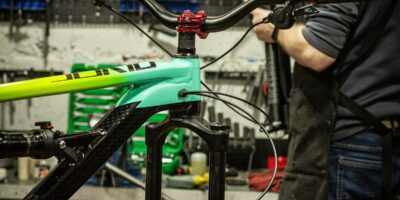
Set your bike in a work stand. Loosen the lever clamp enough to rotate the lever so it sits level — the lever blade should be horizontal, or as close to it as you can get. The goal is to orient the reservoir inside the lever so that any air inside it rises toward the bleed port. This small setup step makes the whole procedure more effective.
Remove the wheel. Insert your bleed block between the brake pads. This is critical — if you accidentally pull the lever without a block during the bleed, the pistons will extend beyond their normal range and you’ll have a difficult time retracting them without damaging the seals.
Clean the area around the lever bleed port with isopropyl alcohol and a clean rag. Remove the reservoir cover screws — these are typically two small Phillips or JIS screws. Remove the cover and the rubber diaphragm underneath it. Fill the funnel cup about halfway with Shimano mineral oil and thread it onto the lever port. Keep it topped up throughout the procedure.
Connecting to the Caliper
Fill one syringe with approximately 20ml of mineral oil. Connect the syringe to the caliper bleed port using the appropriate fitting from your Shimano bleed kit. The caliper bleed port screw is typically an 8mm fitting on older calipers and a 7mm on more recent models. Check yours before you start.
Open the caliper bleed port — just crack it, a quarter turn. The syringe should now be connected to an open port.
Pushing Fluid and Removing Air
Slowly push fluid up through the caliper using the syringe. Gentle, steady pressure — not a fast push. Watch the funnel cup at the lever. Bubbles will rise through the fluid in the funnel as air exits the system. Keep pushing slowly until no more bubbles appear in the funnel cup and fresh, clear mineral oil is flowing through consistently. This can take anywhere from 30 seconds to several minutes depending on how much air is in the system.
While pushing fluid, flick the brake hose with your finger at several points along its length. Tap the caliper body. These physical vibrations dislodge stubborn air bubbles clinging to the interior walls of the system.
Once the bubbles stop, close the caliper bleed port. Don’t overtighten — snug is sufficient. Remove the syringe. Squeeze the lever five to ten times to work any remaining air toward the reservoir. The fluid level in the funnel may drop slightly as the system settles. Top it up with fresh mineral oil.
Finishing the Shimano Bleed
With the caliper port closed and fluid topped up in the funnel, carefully remove the funnel without spilling oil into the lever cavity. The diaphragm goes back in first — make sure it’s seated flat with no folds or creases. Reinstall the reservoir cover and snug the screws down. Don’t overtighten these; they’re small and the threads strip easily.
Wipe everything clean with isopropyl alcohol. Reinstall the wheel. Squeeze the lever — it should feel firm, responsive, and reach full engagement well before the bar. If it still feels spongy, there’s likely a stubborn air pocket in the caliper that needs another round. A second pass almost always clears it.
SRAM Hydraulic Brake Bleed Procedure
The SRAM process is different from Shimano’s in both direction and technique. SRAM uses a two-syringe closed system where fluid moves between both ends simultaneously, and the procedure relies on a specific “bleeding edge” technique to purge air from the lever. Get this right and the lever feel improvement is dramatic.
Initial Setup
Rotate the SRAM lever so the bleed port on the lever body faces upward — the lever should be roughly perpendicular to the bar. This orientation positions the internal reservoir so air floats toward the bleed port. Remove the wheel and insert your bleed block between the pads.
Using a Torx T10, remove the lever bleed port screw. It’s small — don’t lose it. Fill one syringe with approximately 10ml of DOT fluid and expel any air bubbles from the syringe itself by tapping it and pushing the plunger until a small stream of fluid exits. Connect this syringe to the lever bleed port. The SRAM syringes have a locking collar that threads onto the port — engage it fully.
Fill the second syringe with about 5ml of DOT fluid and connect it to the caliper bleed port using the 7mm fitting. Open the caliper bleed port a quarter turn. Both syringes are now connected to an open system.
The Two-Syringe Exchange
With the caliper syringe plunger pulled back slightly (creating a slight vacuum), slowly push fluid from the lever syringe down through the system toward the caliper. Watch for bubbles moving through the clear tubing. As you push from the lever side, pull gently on the caliper syringe — you’re creating fluid movement through the entire system in one direction.
Reverse the direction. Push gently from the caliper side while pulling on the lever syringe. Work the fluid back and forth three to four times. Tap the hose, caliper, and lever body during this process to dislodge air.
The Bleeding Edge Technique
Frustrated by persistent air in SRAM systems, experienced mechanics developed what’s commonly called the “bleeding edge” technique. With both syringes connected and the system open, pull the lever blade fully to the bar and hold it there. In this position, a small internal port inside the lever — the bleeding edge — opens up and exposes a pocket where air commonly hides in SRAM lever assemblies. While holding the lever pulled, push a small amount of fluid from the caliper syringe. Release the lever slowly. Repeat this three to five times.
This step makes a significant difference. Without it, you can do a perfectly competent two-syringe bleed and still end up with a marginally spongy lever because that internal air pocket never got flushed. It’s the step most abbreviated guides leave out.
Closing the SRAM System
With both syringes still connected, close the caliper bleed port. Give the lever syringe plunger a very slight forward push to create minimal positive pressure in the system — this prevents air from being drawn back in as you disconnect. While maintaining that light pressure on the lever syringe, quickly remove it and reinstall the lever bleed port screw with the Torx T10.
Remove the caliper syringe. Wipe everything thoroughly with isopropyl alcohol. Reinstall the wheel. Squeeze the lever — firm, immediate engagement, no sponginess.
If the lever still has any soft feeling, repeat the bleeding edge technique specifically. Nine times out of ten, that’s the remaining air location in a SRAM system.
Post-Bleed Check for Both Systems
After bleeding either system, spin the wheel and apply the brake progressively. Listen and feel for anything unusual. The lever should be firm throughout its travel with clear engagement before it reaches the bar. Take the bike for a short test ride before trusting the brakes on a descent — even a quick lap around the block gives you confirmation that the bleed worked before you commit to terrain where braking performance matters.
Check all bleed port screws for tightness after the first ride. Thermal expansion from braking can occasionally reveal a port that wasn’t quite snug enough. It’s a five-second check that prevents a fluid leak on your second ride.
Hydraulic brake bleeding at home pays for itself quickly. A single bleed kit from Shimano or SRAM costs less than one shop bleed service. After the first time, the kit is already paid for, and every subsequent bleed is essentially free. More than the money, though, there’s something genuinely satisfying about squeezing a lever that you just brought back from soft and vague to precise and powerful — knowing exactly what changed and why, and having done it with your own hands in your own garage.

Stay in the loop
Get the latest bike maintenance pros updates delivered to your inbox.