Tire Repair Guide: Fix Flats and Get Rolling Again
A flat tire is the most common mechanical problem cyclists face, but it is also one of the easiest to fix. Whether you are stranded on a country road or working in your garage, mastering tire repair is an essential skill that keeps you riding.
Understanding Flat Tire Causes
Puncture (Most Common):
- Sharp objects pierce through tire into tube
- Glass, thorns, wire, nails are typical culprits
- Usually a small hole, easy to patch
Pinch Flat (Snake Bite):
- Tube gets pinched between rim and obstacle
- Causes two parallel holes resembling snake bite marks
- Results from hitting curbs, potholes, or riding underinflated
Valve Failure:
- Presta valve core loosens
- Valve base separates from tube
- Damage from improper pump attachment
Rim Tape Issues:
- Exposed spoke holes puncture tube from inside
- Damaged or shifted rim tape creates sharp edges
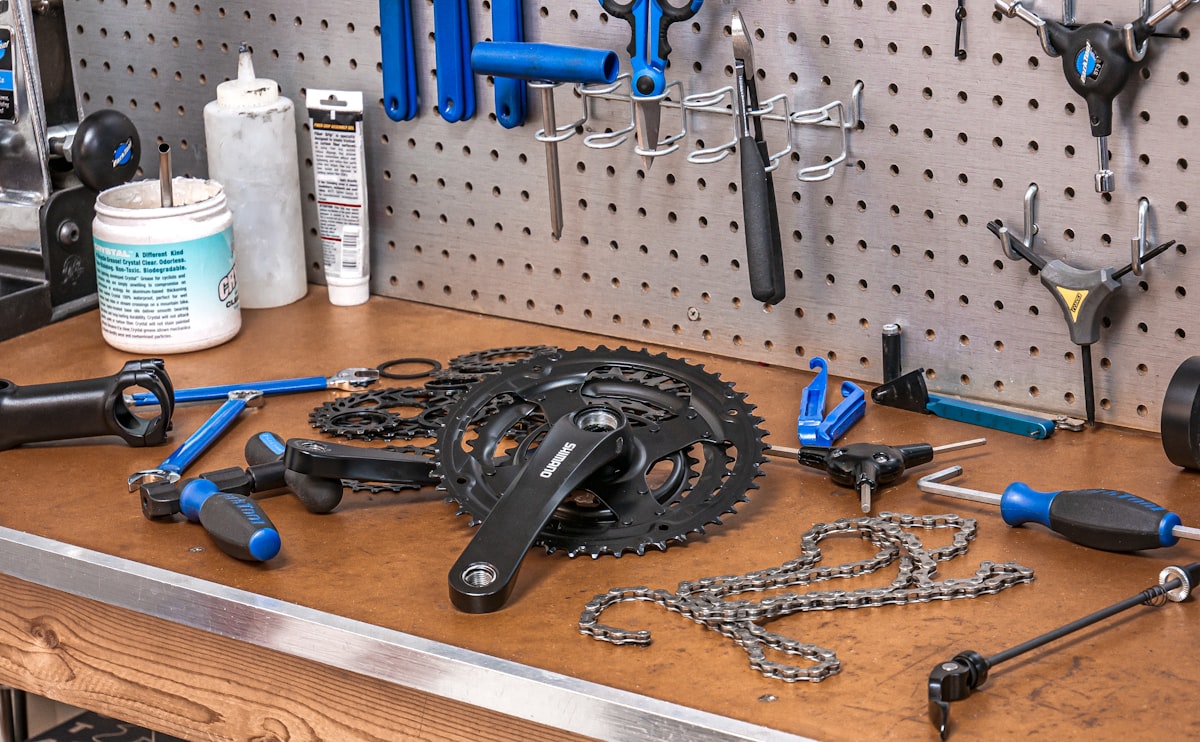
Tools You Need
- Tire levers (2-3 plastic levers recommended)
- Spare tube (correct size for your wheel)
- Patch kit (for backup or when spare is used)
- Portable pump or CO2 inflator
- Multi-tool with tire boot if available
Removing the Wheel
Front Wheel:
- Release quick-release lever or thru-axle
- If rim brakes, release brake caliper first
- Lift fork and remove wheel
Rear Wheel:
- Shift to smallest cog to ease removal
- Release brake caliper if rim brakes
- Open quick-release or thru-axle
- Pull derailleur back and lift wheel out
Removing the Tire and Tube
- Deflate tube completely by pressing valve core
- Push tire beads toward center of rim (this loosens them)
- Insert first tire lever under bead, hook to spoke
- Insert second lever 2-3 inches away, slide around rim
- Once one bead is off, reach in and remove tube
- Leave second bead on rim – makes reinstallation easier
Finding the Puncture
Method 1: Visual Inspection
- Inflate tube and listen for hissing
- Rotate tube near your face or lips to feel escaping air
- Look for obvious damage or foreign objects
Method 2: Water Test
- Inflate tube partially
- Submerge in water section by section
- Watch for bubbles indicating leak location
- Dry thoroughly before patching
Patching the Tube
- Mark the hole location if needed
- Use sandpaper or scraper from patch kit to roughen area around hole
- Apply thin, even layer of vulcanizing cement
- Wait 2-3 minutes until cement becomes tacky
- Apply patch firmly, pressing from center outward
- Hold pressure for 60 seconds
- Remove clear plastic backing if pre-glued patch
- Test patch by inflating tube and checking for leaks
Inspecting the Tire
Before reinstalling, check for the cause:
- Note where puncture occurred relative to tire
- Run fingers carefully along inside of tire
- Check for embedded debris, cuts, or holes
- Remove any objects still stuck in tire
- If large cut exists, use tire boot or folded dollar bill as emergency liner
Installing the New or Patched Tube
- Inflate tube just enough to give it shape
- Insert valve through rim hole first
- Tuck tube evenly around rim inside tire
- Ensure tube is not pinched between tire bead and rim
- Starting opposite the valve, push tire bead onto rim with hands
- Work toward valve from both sides
- For tight tires, push beads into center channel for more room
- Use tire lever as last resort only – risk pinching tube
Inflating and Final Checks
- Add small amount of air
- Check that tube is not visible between tire and rim anywhere
- Confirm valve is straight, not angled
- Inflate to recommended pressure shown on tire sidewall
- Check that tire seats evenly by spinning wheel and watching bead line
Preventing Future Flats
- Proper inflation: Check pressure before every ride
- Quality tires: Invest in puncture-resistant models for commuting
- Tire liners: Plastic strips between tire and tube add protection
- Sealant: Tubeless setups or tube sealant seal small punctures automatically
- Watch the road: Avoid glass, debris, and gutter trash
- Replace worn tires: Thin, cracked, or worn tires puncture easily
When to Replace vs Repair
Replace the tube when:
- Valve is damaged or leaking at base
- Multiple patches already present
- Large tear that cannot be patched
- Dry rot or cracking visible
Flat repair is a fundamental skill every cyclist should master. Practice at home so you are confident when it happens on the road, and always carry the tools you need for trailside repairs.

Stay in the loop
Get the latest bike maintenance pros updates delivered to your inbox.