Tubeless Conversion: Setup and Maintenance Guide
Tubeless Conversion has become tricky with all the confusion flying around. As someone who went from roadside breakdowns to home workshop confidence, I figured out how to handle tubeless conversion. Today, I will share it all with you.
Benefits of Going Tubeless
- Flat prevention: Sealant plugs small punctures automatically
- Lower pressure: Run 15-20% less pressure without pinch flats
- Better traction: Lower pressure means more grip
- Weight savings: Eliminates tube weight (offset slightly by sealant)
- Improved comfort: Lower pressure absorbs more vibration
What You Need
Required Components:
- Tubeless-ready (TLR) or tubeless-compatible rims
- Tubeless-ready tires (look for TLR, TR, or tubeless-compatible marking)
- Tubeless rim tape (if not pre-taped)
- Tubeless valve stems
- Tubeless sealant (Stan’s, Orange Seal, Muc-Off, etc.)
- Floor pump or compressor
Step-by-Step Conversion
Step 1: Prepare the Rim
- Remove existing tire, tube, and rim strip
- Clean rim bed thoroughly with isopropyl alcohol
- Ensure rim is completely dry before taping
Step 2: Apply Tubeless Tape
- Start opposite the valve hole
- Apply tape centered on rim bed with tension
- Overlap tape by 4-6 inches at finish
- Press tape firmly into rim channel
- Use tire lever to burnish tape into edges
- Poke hole for valve with sharp pick
Step 3: Install Valve
- Insert valve from inside rim
- Tighten locknut firmly but don’t over-torque
- Ensure rubber base seats flat against tape
Step 4: Mount Tire
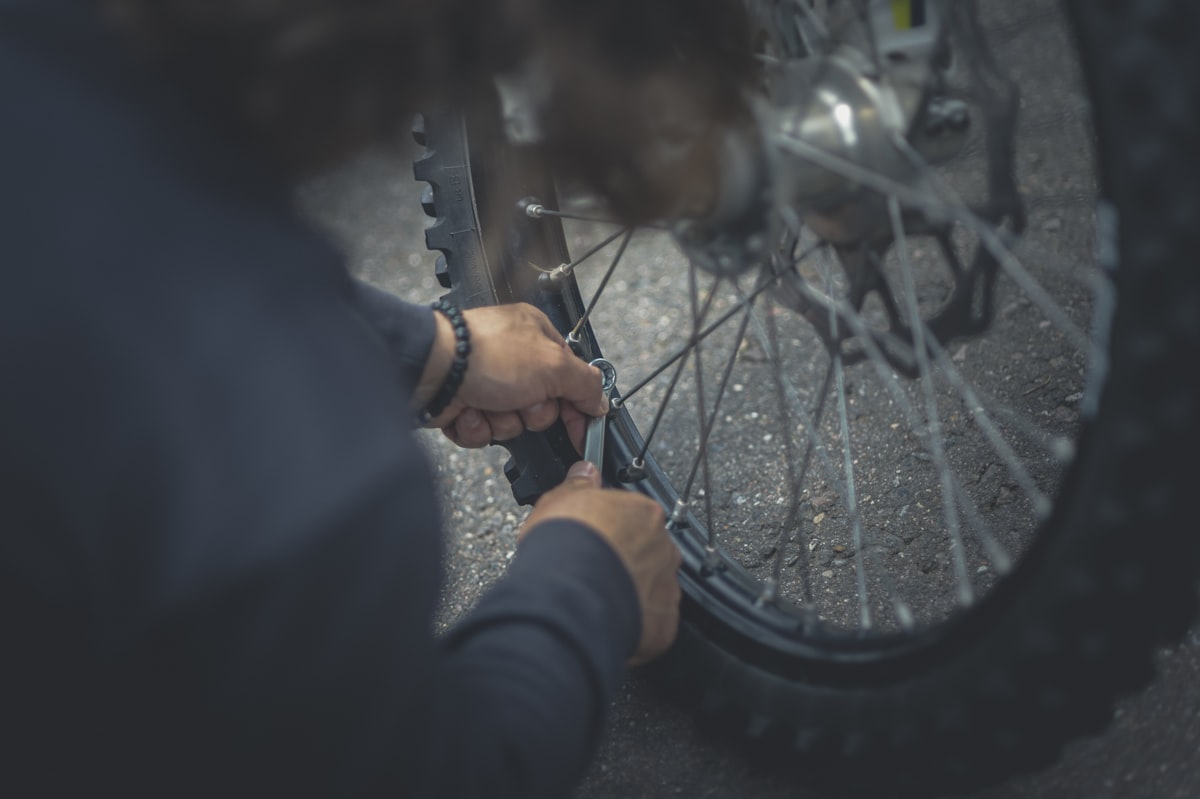
- Mount one tire bead onto rim
- Add sealant through open side (60-90ml for MTB, 30-60ml for road)
- Mount second bead, leaving small section undone
- Work remaining bead onto rim by hand
Step 5: Seat the Beads
- Remove valve core for maximum airflow
- Inflate quickly with floor pump or compressor
- Listen for “pop” as beads seat on rim
- Install valve core and inflate to max pressure
- Shake and rotate wheel to spread sealant
- Let sit overnight, then adjust to riding pressure
Troubleshooting Stubborn Tires
- Won’t seal: More sealant, check tape coverage, inflate higher initially
- Slow leak at bead: Deflate, break bead, add sealant directly to bead area
- Won’t seat: Try tubeless booster/compressor, or temporarily use tube to stretch bead
- Leaking at valve: Check tape seal, tighten locknut, ensure proper valve length
Ongoing Tubeless Maintenance
Monthly:
- Check sealant level by shaking wheel (should slosh)
- Top off if low (sealant dries over time)
Every 3-6 Months:
- Remove tire, clean out dried sealant
- Inspect tape and re-tape if damaged
- Add fresh sealant
When Needed:
- Plug larger punctures with tubeless plugs
- Boot sidewall cuts from inside
- Carry emergency tube for catastrophic failures
Sealant Tips
- Shake bottle well before every use
- Latex-based sealants (Stan’s) seal faster but dry quicker
- Synthetic sealants last longer in hot climates
- Store sealant at room temperature
- Replace sealant before rides in extreme conditions
Tubeless conversion typically takes 30-60 minutes per wheel on first attempt. Once set up, the system requires minimal maintenance while providing better ride quality and puncture protection.

Stay in the loop
Get the latest bike maintenance pros updates delivered to your inbox.