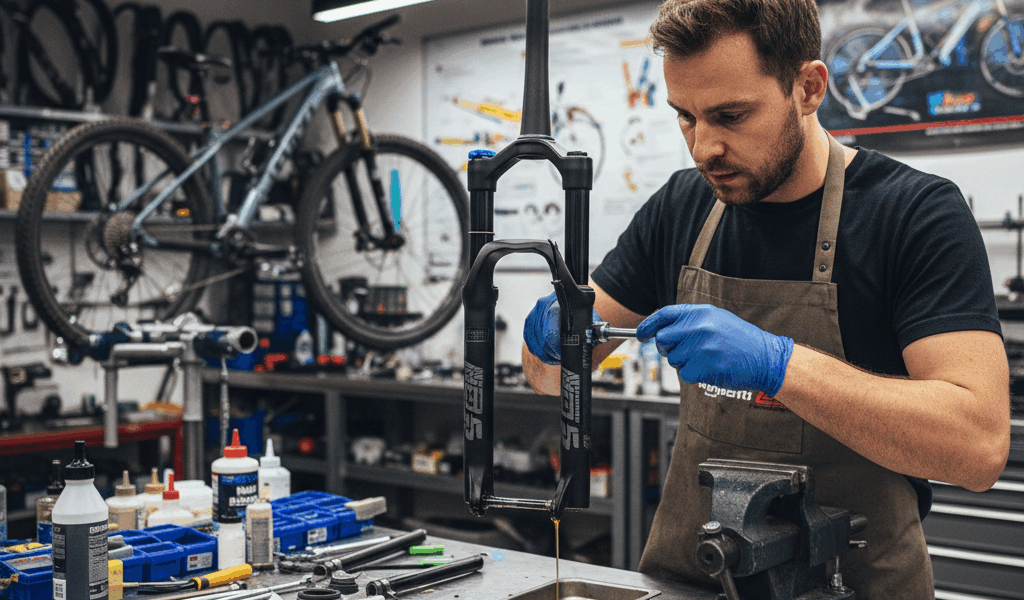
Rear Shock Service: Maintain Your Full-Suspension Performance
Rear shocks on full-suspension mountain bikes work hard, cycling thousands of times per ride while managing heat, dirt, and moisture. Regular service keeps your shock performing consistently and prevents expensive rebuilds. Here’s how to maintain your rear shock properly.
Understanding Rear Shock Types
Air Shocks:
- Lighter weight, easily adjustable
- More sensitive to temperature changes
- Require regular air can service
- Common brands: Fox Float, RockShox Deluxe/Super Deluxe Air
Coil Shocks:
- Consistent feel regardless of temperature
- Better small-bump sensitivity
- Heavier, spring rate changes require new spring
- Common brands: Fox DHX, RockShox Super Deluxe Coil, Cane Creek
Service Intervals
- Every ride: Wipe shock body clean, check mounting hardware
- Every 50 hours: Air can service (air shocks)
- Every 100-200 hours: Full damper service
- Annually: Complete rebuild including seals and oil
Air Can Service (DIY)
Air can service removes contamination and refreshes lubrication on the air sleeve:
Tools Needed:
- Shock pump
- Appropriate wrenches for air can
- Slickoleum or Fox Float Fluid
- Clean rags
- Soft jaw vise or shock holder
Step 1: Remove and Depressurize
- Note current air pressure setting
- Remove shock from frame (note orientation)
- Fully release air pressure
- Cycle shock to expel remaining air
Step 2: Disassemble Air Can
- Unthread air can from damper body
- Slide air can off the shaft
- Remove and inspect seals and wiper
- Clean all components thoroughly
Step 3: Reassemble
- Apply Slickoleum or appropriate grease to seals
- Slide air can back onto shaft
- Thread air can onto damper body
- Reinstall shock on frame
- Inflate to original pressure
- Check for smooth operation through full travel
Checking Shock Sag
Proper sag ensures optimal suspension performance:
- Set shock to fully open (all compression adjustments off)
- Sit on bike in riding position with gear
- Have someone measure shock stroke used
- Target 25-30% sag for trail riding
- Adjust air pressure until sag is correct
- Re-enable compression settings to taste
When Professional Service Is Needed
- Damper feels inconsistent or makes noise
- Oil leaking from damper body
- IFP (internal floating piston) issues
- Shock won’t hold air pressure after air can service
- Any internal damper work
Linkage Maintenance
Don’t forget the frame’s suspension linkage:
- Check pivot bolts for proper torque monthly
- Inspect bearings for play or grinding
- Clean and grease pivots during major service
- Replace worn bearings before they damage frame
Basic air can service takes 20-30 minutes and dramatically improves shock performance. Combined with regular cleaning and inspection, this maintenance prevents costly rebuilds and keeps your suspension feeling factory-fresh.


Stay in the loop
Get the latest bike maintenance pros updates delivered to your inbox.